Fuel price comparison for France
This public information service brings together petrol and diesel prices reported by filling stations nationwide. It helps users quickly spot the most competitive outlets nearby, or to read price levels at local and national scale.
Purpose
Make price differences between stations visible and support informed choices when refuelling: save time and money by comparing like-for-like offers, with no account required.
Main features
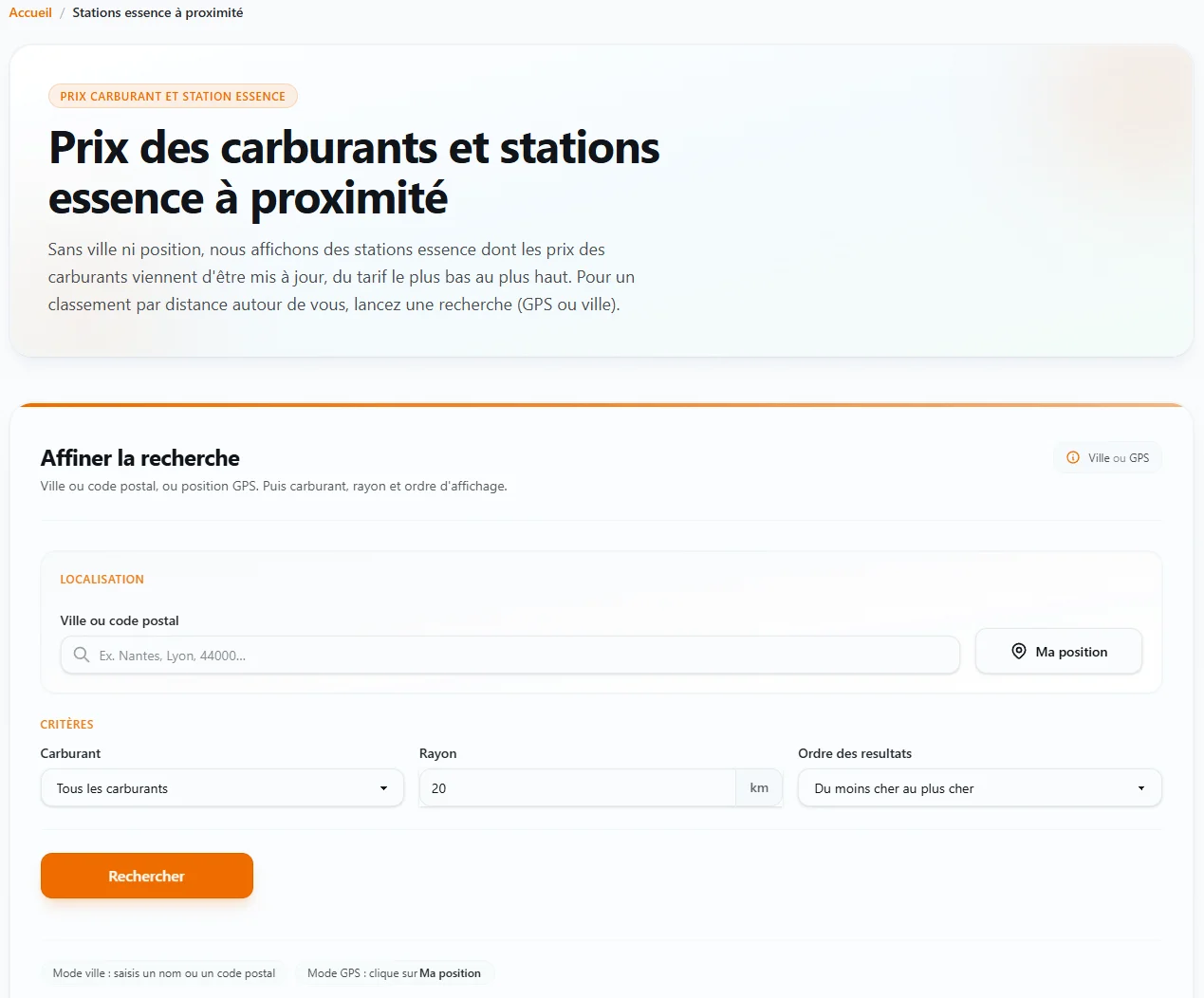
Station search around a typed location (city or postal code), with location suggestions, or one-tap search from the device’s current position.
Fuel-type filter, adjustable search radius in kilometres, and result ordering from cheapest to most expensive or from nearest to farthest.
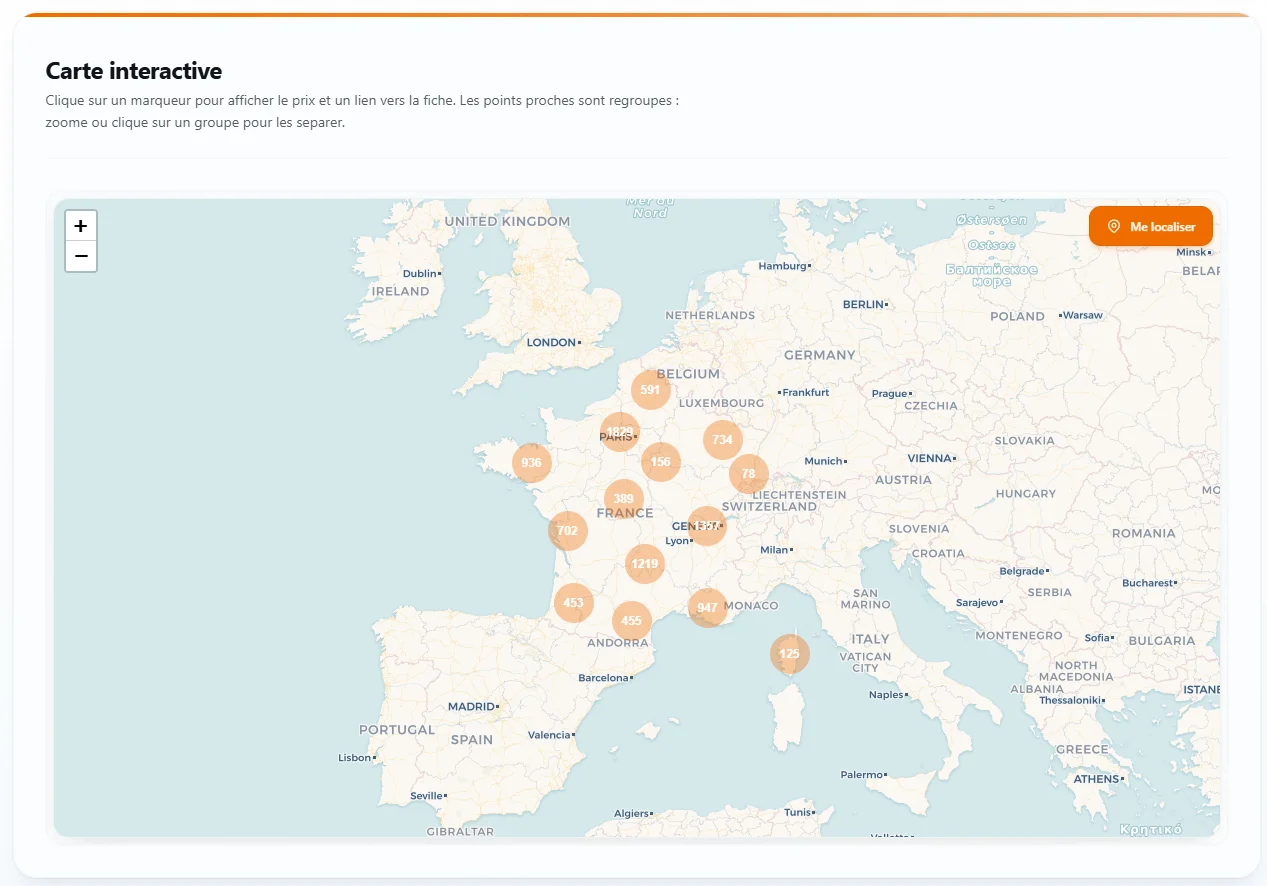
Nearby stations presented as a list or on a map, according to user preference.
National average prices by fuel type, plus a recent trend chart to situate market behaviour.
Dashboard of ongoing stock outages: breakdown by product and an aggregate view of how many distinct stations are affected.
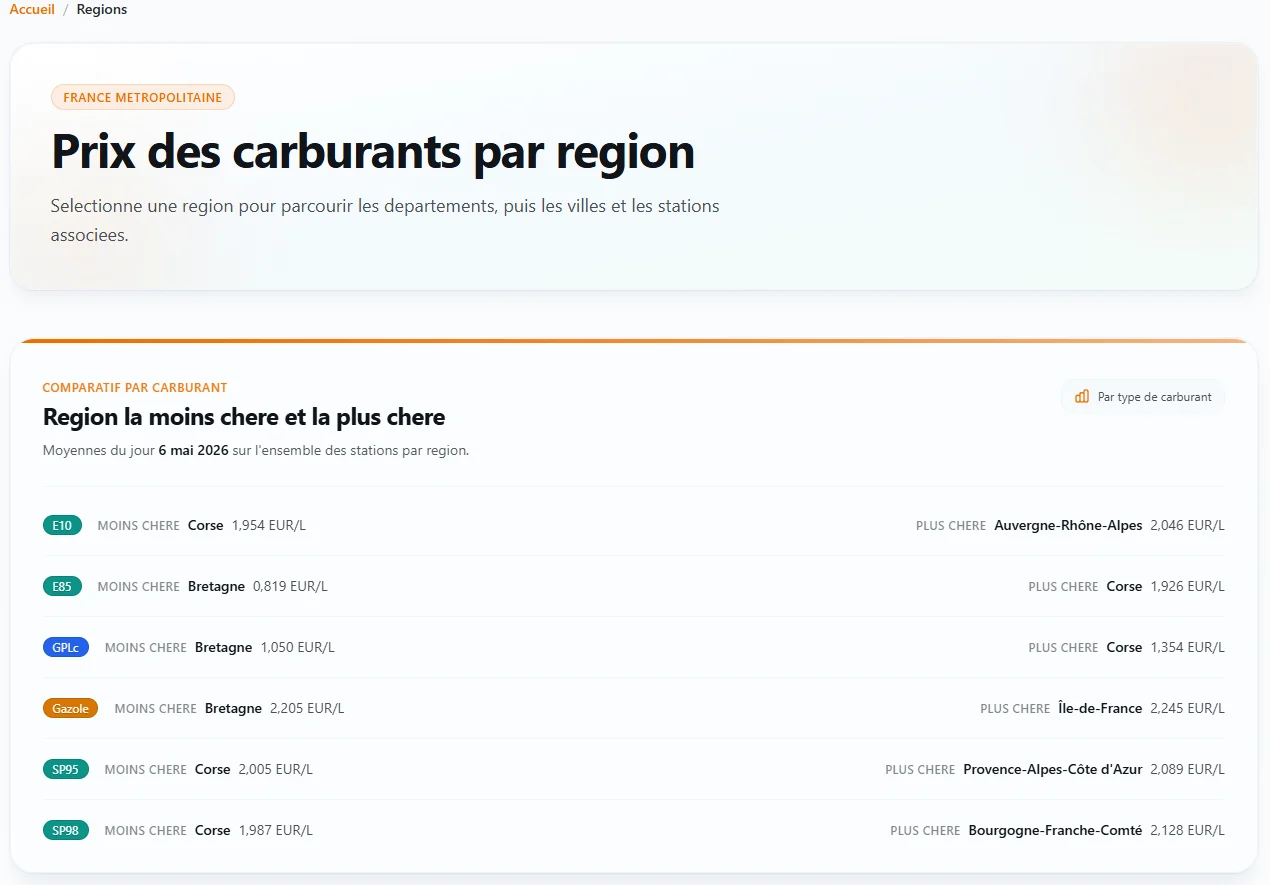
Thematic entry points for major cities, regions, departments, and dedicated city or station detail pages for deeper local comparison.
A “today’s prices” page for a concise snapshot of current tariffs, plus standard informational pages (about, privacy, terms, contact).
What users can do
Find the most relevant stations in a few steps using price or distance as the lead criterion, and refine the search by fuel and geographic area.
Switch between list and map views to orient visually, review national aggregates, and monitor the scale of active outages.
Explore France by large urban areas, region, or administrative territory to compare local price levels.
User experience
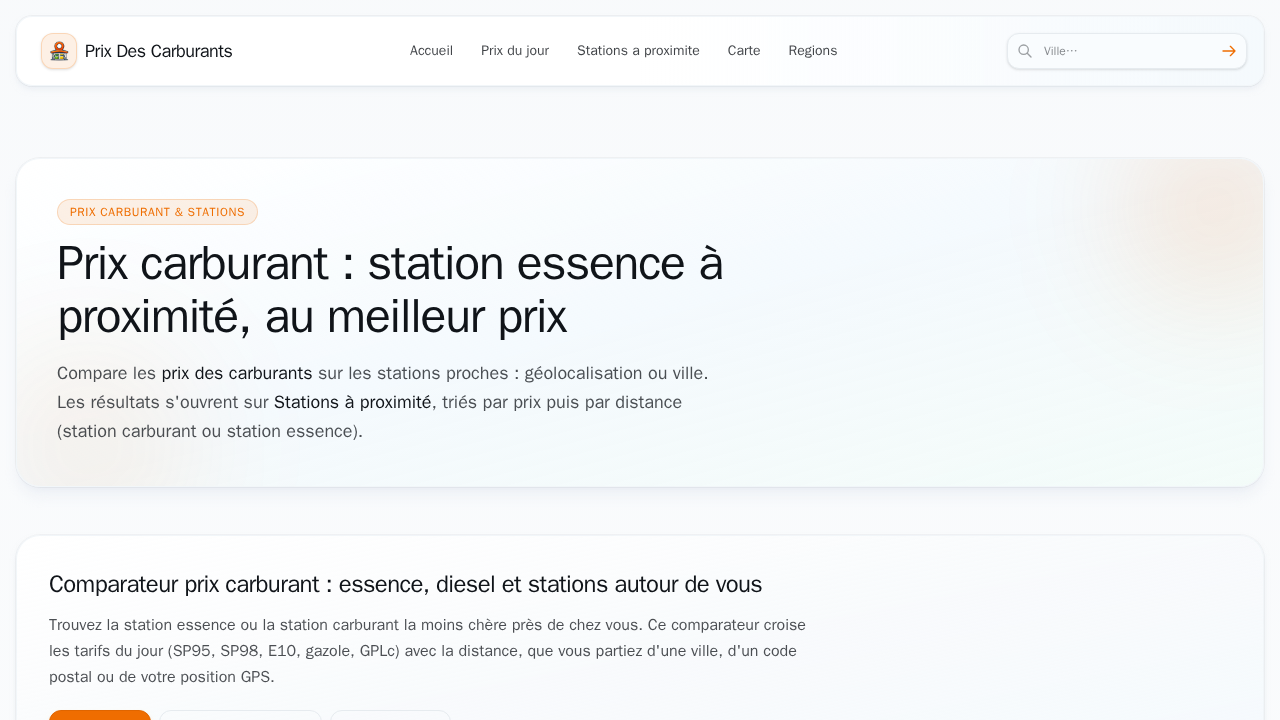
A clarity-first journey: search is prominent, navigation is consistent between home, results, map, and territory-based content.
A responsive layout for phone and desktop, with quick access to geolocation and explicit feedback if positioning is denied or unavailable.
Readable presentation of figures (price per litre, averages, lists, and charts) so users grasp what matters before heading to a station.